Smart Home Interoperability (AIoT): The Real Battle Is Standards and Trust
Smart homes fail when devices don’t cooperate and users lose control. This article explains interoperability as a lifestyle issue—how standards, local control, and privacy determine daily value.

Summary: The smartest smart home is often the simplest one. Interoperability matters because it determines whether your home is a coherent system or a pile of apps. The daily-life impact is convenience vs control, and privacy vs personalization.
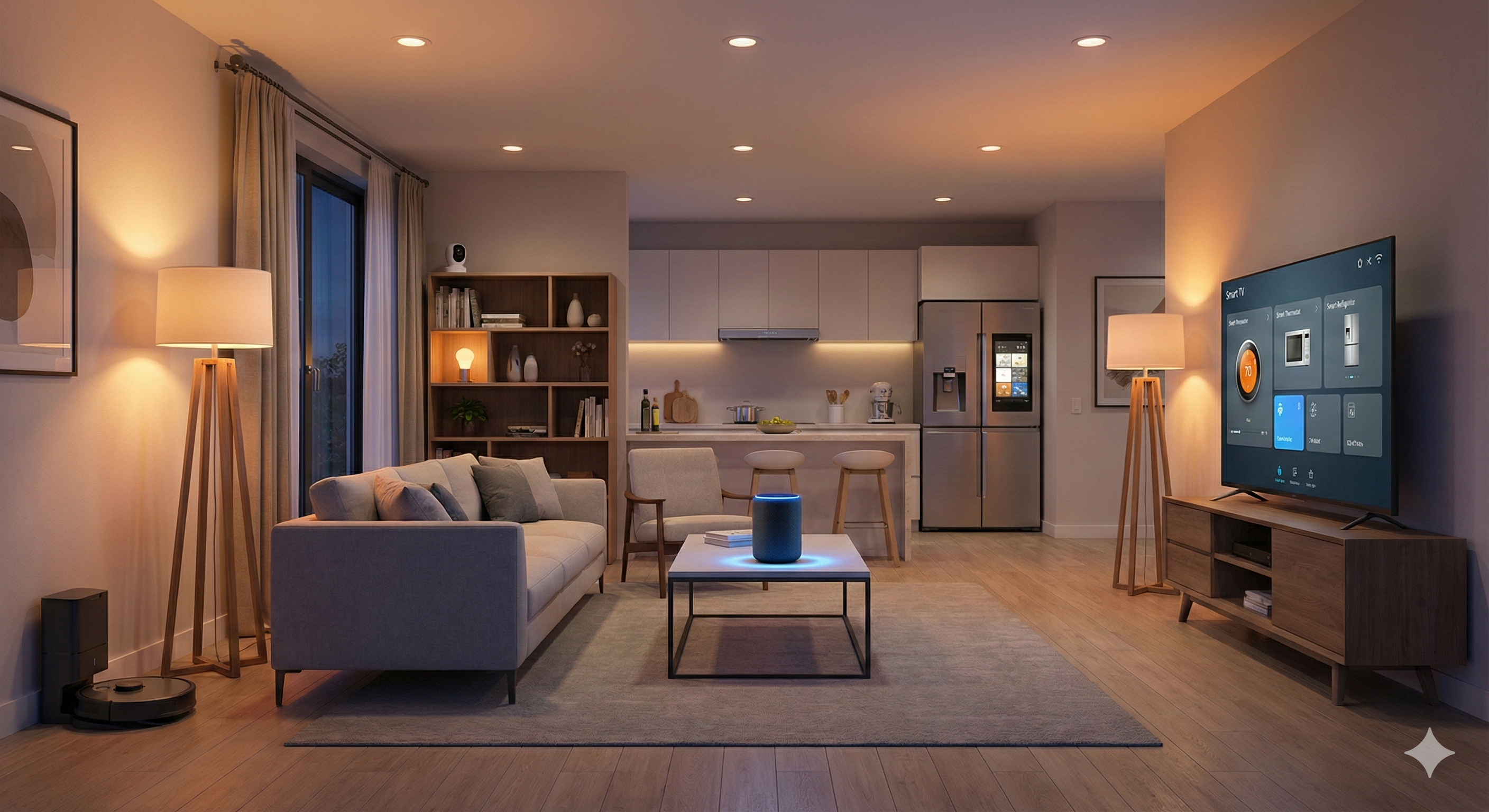
1) Lifestyle challenge
A “smart home” becomes stressful when it creates more work: multiple apps, devices that don’t sync, and automations that fail silently. People want a home that simply behaves—lights that respond, climate that is predictable, and routines that don’t require constant tuning.
The biggest barrier isn’t lack of smart devices. It’s lack of coordination.
2) Technology role
Interoperability is the ability for devices and platforms to work together reliably. AIoT (AI + IoT) adds a layer of “adaptive behavior,” but adaptation only works if the system is stable.
The technology role should be:
- unify control surfaces,
- enable predictable automation,
- preserve local operation when the internet is down.
If the system depends on cloud connectivity for basic functions, daily trust erodes.
3) Daily-life application
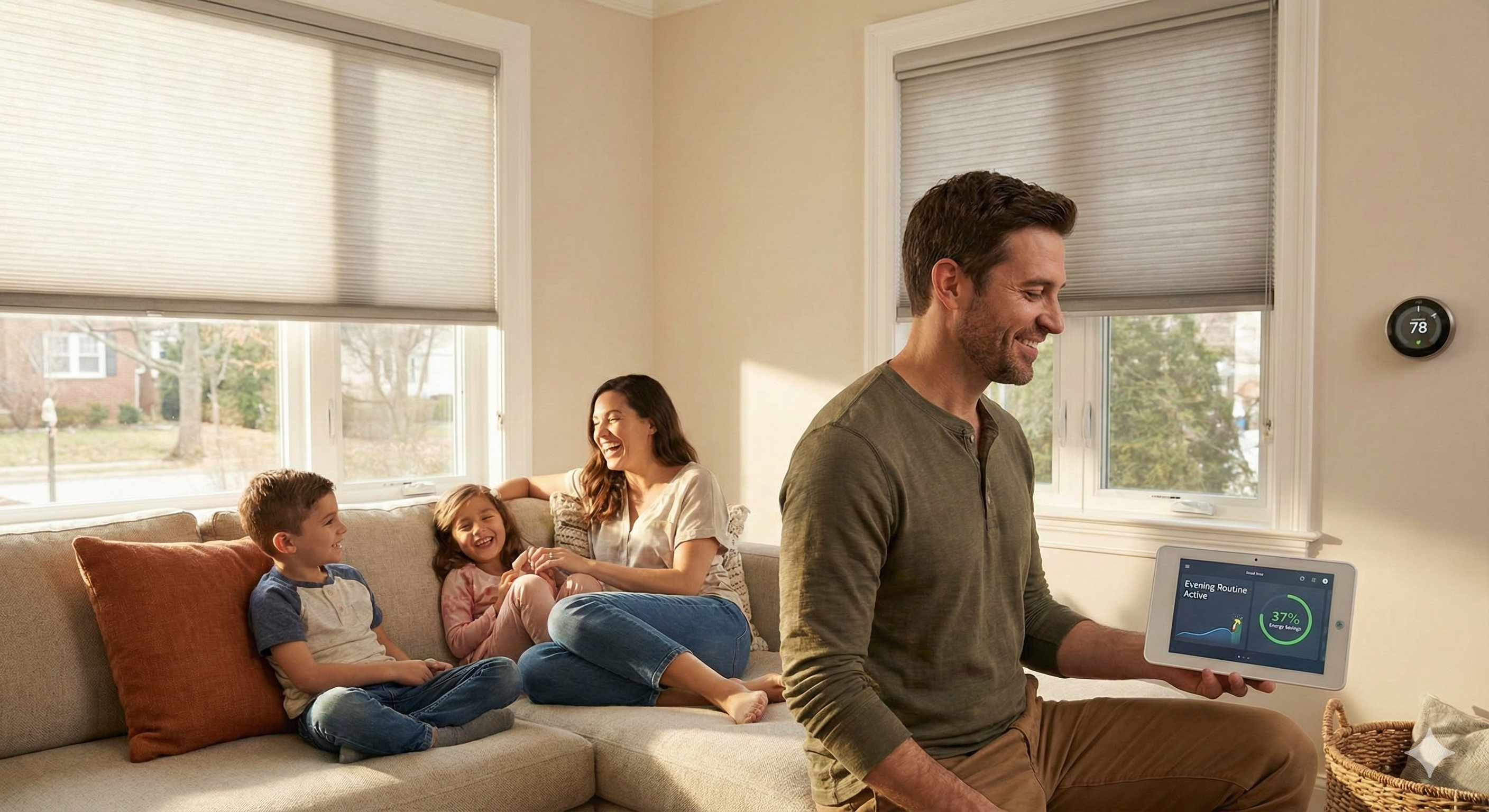
Scenario A: Morning routine without micromanagement. Lights fade up, temperature adjusts, and a short status summary appears—without the user opening three apps.
Scenario B: Household coordination. Multiple people with different preferences still get consistent behavior because the system supports profiles and predictable overrides.
Scenario C: Travel mode. Security-sensitive behaviors (lights, sensors, notifications) are consistent and auditable, not “mystery automations.”
The difference between useful and annoying is override control: users must be able to say “not today” easily.

4) Benefits vs concerns
Benefits
- Reduced friction: fewer apps and repeated setups.
- More reliable routines: consistent behavior across devices.
- Local resilience: basic functions keep working.
Concerns
- Privacy: microphones, cameras, and presence detection are sensitive.
- Control: automations can become opaque.
- Lock-in: ecosystems can trap you into one vendor.
The best systems default to local control and require explicit consent for personalization features.
5) Key Insights & Trends (2025)
The Smart Home in 2025 is finally delivering on the promise of interoperability, driven by the maturity of the Matter standard and the infusion of local AI. Devices from different brands now work together seamlessly, and automation is becoming predictive rather than just reactive.
Key Trends:
- Matter 2.0 Adoption: The latest iteration of the Matter protocol supports a wider range of device types (including appliances and energy management), making cross-ecosystem control the norm.
- Local AI Processing: To address privacy concerns and latency, smart home hubs are increasingly processing voice commands and automation logic locally, reducing reliance on the cloud.
Data Points:
- Matter-compliant devices accounted for 60% of all new smart home shipments in 2025, signaling the end of the “walled garden” era.
- Households utilizing AI-driven energy management systems reduced their energy consumption by an average of 15-20% in 2025.
6) Adoption barriers
- Setup complexity: consumers want “works out of the box.”
- Network reliability: poor Wi€‘Fi turns smart homes into fragile homes.
- Inconsistent standards: uneven support across devices.
- Household trust: not everyone in the home wants the same tradeoffs.
6) Near-future outlook
The near future is likely less “more AI” and more “better foundations”:
- stronger interoperability standards,
- better local hubs,
- clearer privacy dashboards,
- simpler automation authoring.
AI will be most helpful when it operates as a suggestion layer (“you usually do X at 7pm—want to automate it?”) rather than a silent controller.
7) FAQs
Q: What makes a smart home feel reliable?
A: Local-first behavior for core functions, consistent control, and easy overrides.
Q: Do I need one brand for everything?
A: Not necessarily, but mixed ecosystems require standards support and careful planning.
Q: What should I avoid?
A: Systems that hide automation logic or require cloud connectivity for basic controls.
Q: Is AI necessary?
A: Often no. A stable interoperable foundation usually delivers more value than “smart” guesses.
8) Balanced conclusion
Interoperability is what turns gadgets into a system. A smart home becomes valuable when it reduces daily friction and preserves user control. Before adding “AI,” invest in standards support, local reliability, and transparent privacy controls—because trust is the real platform.
Related Articles
Related Articles

AI Wearables: Convenience, Control, and the New Personal Data Boundary
AI wearables promise hands-free assistance and better habits, but the real question is what you trade for that convenience. This article maps everyday scenarios to privacy, control, and realistic adoption barriers.

AR/VR Daily Experiences: Where Immersion Helps—and Where It’s Just Noise
AR and VR are moving from novelty to utility in specific contexts. This article translates immersive tech into everyday scenarios, with a clear view of convenience vs control and privacy vs personalization.
Autonomous Vehicles & Robotaxis: Convenience vs Control in Everyday Mobility
Robotaxis and autonomous driving systems can change how cities move, but adoption depends on trust, regulation, and everyday practicality. This article focuses on realistic scenarios and the tradeoffs people feel.