AI Wearables: Convenience, Control, and the New Personal Data Boundary
AI wearables promise hands-free assistance and better habits, but the real question is what you trade for that convenience. This article maps everyday scenarios to privacy, control, and realistic adoption barriers.

Summary: AI wearables are less about futuristic gadgets and more about a new interface layer: always-available, context-aware assistance. The practical question is where they reduce friction without quietly expanding surveillance.

1) Lifestyle challenge
Most people don’t need more apps—they need fewer interruptions. Modern life is a sequence of tiny decisions: do I reply now, remember this later, navigate there, buy this, schedule that. The fatigue isn’t “lack of information”; it’s the constant switching cost.
Wearables historically helped by making a few signals visible (steps, heart rate, notifications). AI wearables aim to go further: interpret context and offer the next best action. That can be helpful, but it also changes what “personal data” means when the device is always on your body.
2) Technology role
AI wearables typically combine:
- Sensors (movement, location, sometimes voice cues depending on features)
- On-device processing (for speed and sometimes privacy)
- Cloud services (for heavier reasoning and cross-device sync)
- A notification surface (watch, ring, earbuds, glasses)
The practical role is to reduce interaction cost: fewer taps, less typing, more “ambient” assistance. The risk is that convenience can normalize continuous capture.
3) Daily-life application
Three realistic scenarios illustrate the value—and the boundaries.
Scenario A: The calendar rescue. You say “remind me about this next week” after a meeting. A wearable that can infer context (time, location, prior conversation metadata) can create a useful reminder with less effort than phone typing.
Scenario B: The attention shield. Instead of mirroring every notification, an AI layer can filter: only urgent messages reach you during deep work. The benefit is focus; the cost is that the system must learn what “urgent” means for you.
Scenario C: The frictionless errands list. On the way home, you ask for “the groceries we usually forget.” The wearable can suggest based on prior purchases or notes. This is where the value feels tangible—but it also reveals how much behavioral data is being modeled.

4) Benefits vs concerns
Benefits
- Reduced phone dependence: fewer context switches.
- Faster capture: voice or gesture-driven notes and reminders.
- Habit scaffolding: nudges can help structure routines (without claiming health outcomes).
Concerns
- Privacy creep: “helpful” often requires remembering.
- Control drift: the more automatic it becomes, the harder it is to audit decisions.
- Social friction: always-on devices can be awkward in meetings and public spaces.
A useful rule is “assist without recording by default.” If a feature requires capture, make it explicit and reversible.
5) Key Insights & Trends (2025)
The AI wearables market in 2025 is defined by the shift from “novelty gadgets” to context-aware assistants. While screenless pins had a rocky start, the integration of multimodal AI into smart glasses and health bands has created a seamless overlay of intelligence on daily life.
Key Trends:
- Smart Glasses Resurgence: Lightweight AR glasses with built-in LLMs are gaining traction, offering real-time translation, navigation, and object recognition without breaking eye contact.
- Proactive Health Monitoring: Wearables are no longer just tracking steps; they are predicting health events using continuous monitoring of biomarkers like glucose and blood pressure trends.
Data Points:
- The smart eyewear market is projected to double in value in 2025, driven by the integration of generative AI assistants.
- User retention for AI-enabled health wearables is 40% higher than standard fitness trackers, as users value the personalized, actionable insights provided by on-device AI.
6) Adoption barriers
- Trust: users need clear, simple explanations of what is stored and where.
- Battery and comfort: if it’s annoying to wear, usage collapses.
- False positives: a bad nudge at the wrong moment feels intrusive.
- Ecosystem lock-in: wearables often work best inside one vendor ecosystem.
Adoption tends to start with narrow wins (reminders, notification filtering) and expands only if trust is earned.
6) Near-future outlook
The near-term future is not “wearables replace phones.” It’s wearables reshape phone usage by taking over micro-interactions.
We’ll likely see stronger emphasis on:
- on-device inference for speed,
- clearer privacy controls,
- interoperability standards that reduce lock-in.
The consumer story will be decided less by raw AI capability and more by whether people feel in control of what the device knows.
7) FAQs
Q: Are AI wearables worth it for most people?
A: They’re worth considering if you value reduced phone interactions and lightweight capture, but only if privacy settings are understandable.
Q: What should I look for before buying?
A: Clear data controls, easy mute modes, and transparency about what leaves the device.
Q: Will it “understand” me immediately?
A: Usually it improves over time. That’s useful, but it also increases the importance of deletion and export options.
Q: Can I use it without cloud features?
A: Some features may work offline/on-device, but capability varies. Prefer devices that degrade gracefully.

8) Balanced conclusion
AI wearables can be genuinely practical when they reduce tiny daily frictions—capturing intent, filtering noise, and supporting routines. The tradeoff is that convenience can widen the personal-data boundary. The best adoption strategy is cautious: start with minimal permissions, expand only when the value is clear, and keep “off” options easy.
Related Articles
Related Articles

AR/VR Daily Experiences: Where Immersion Helps—and Where It’s Just Noise
AR and VR are moving from novelty to utility in specific contexts. This article translates immersive tech into everyday scenarios, with a clear view of convenience vs control and privacy vs personalization.

Smart Home Interoperability (AIoT): The Real Battle Is Standards and Trust
Smart homes fail when devices don’t cooperate and users lose control. This article explains interoperability as a lifestyle issue—how standards, local control, and privacy determine daily value.
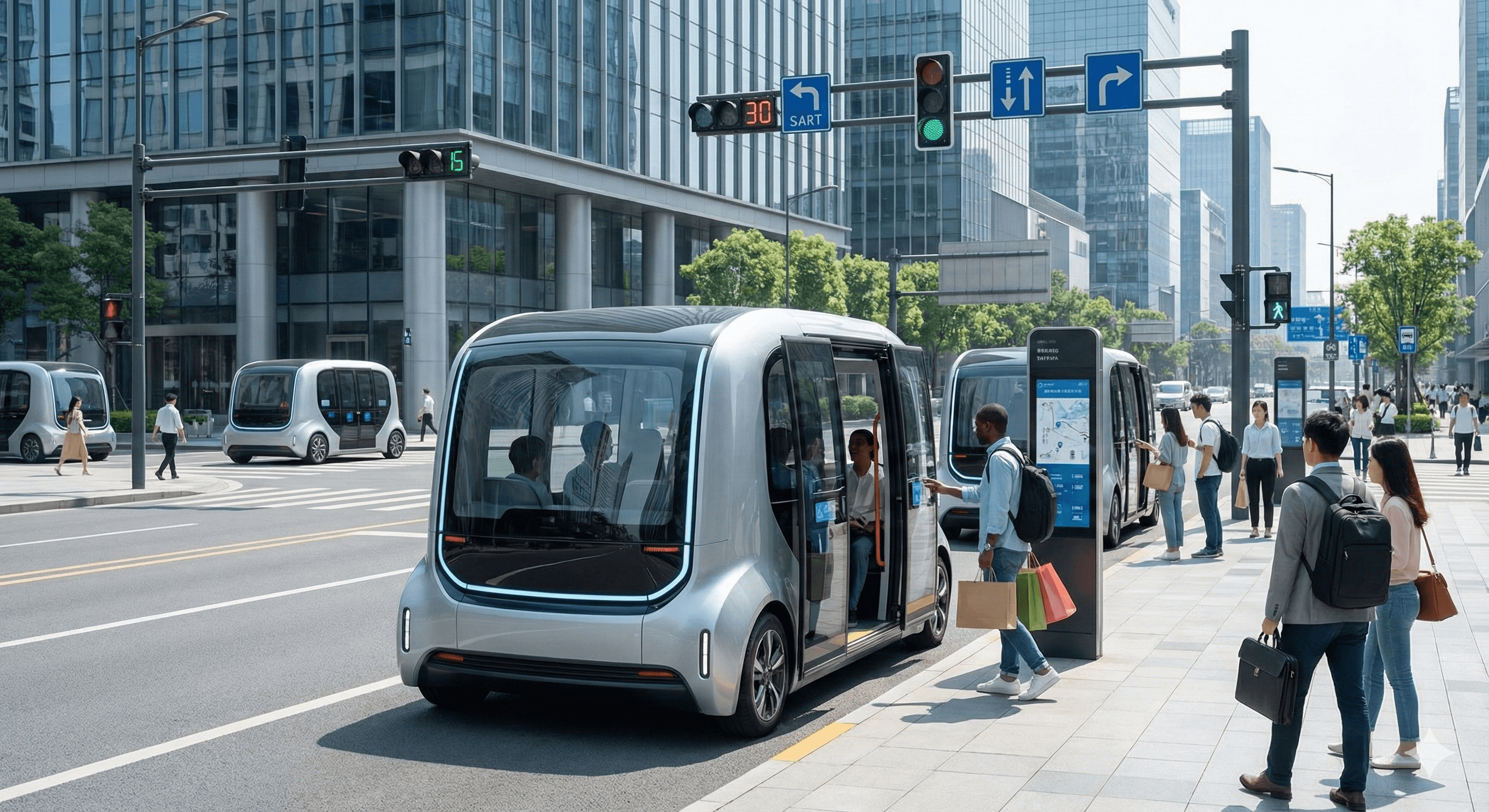
Autonomous Vehicles & Robotaxis: Convenience vs Control in Everyday Mobility
Robotaxis and autonomous driving systems can change how cities move, but adoption depends on trust, regulation, and everyday practicality. This article focuses on realistic scenarios and the tradeoffs people feel.