Healthy Living for Busy Professionals: A Realistic Wellness Guide
Discover science-backed strategies to stay healthy despite a demanding schedule. Learn practical nutrition, fitness, and stress management techniques that require less than 1 hour per day.

Summary: This article presents a realistic wellness system for busy professionals, focusing on short movement “snacks,” simple batch-prepped meals, and sleep habits that fit into a demanding schedule. It translates medical research into practical routines you can sustain in under an hour a day.

You’re crushing it at work, but your health is paying the price. The “Sitting Disease” is real: research shows that sitting for 10+ hours a day increases heart disease risk by 147%.
The good news? You don’t need a 2-hour gym session or a personal chef. You need a system. This guide outlines a realistic, science-backed approach to wellness that fits into a 60-hour work week.
1. Movement: The “Snacking” Strategy
Stop thinking “exercise” and start thinking “movement.” The goal is to break up sedentary time.
Micro-Movements (NEAT)
Non-Exercise Activity Thermogenesis (NEAT) burns more calories than a 30-minute run.
- Walking Meetings: Take calls while walking. You’ll burn 200 calories/hour vs. 50 sitting.
- The Pomodoro Squat: Every 25 minutes, do 10 squats or pushups.
- Stairs Rule: If it’s less than 3 floors, take the stairs. Always.
The Minimum Effective Dose
You only need 20 minutes of high-intensity effort to maintain cardiovascular health. Try a Tabata workout (20 seconds work, 10 seconds rest) before your morning shower.
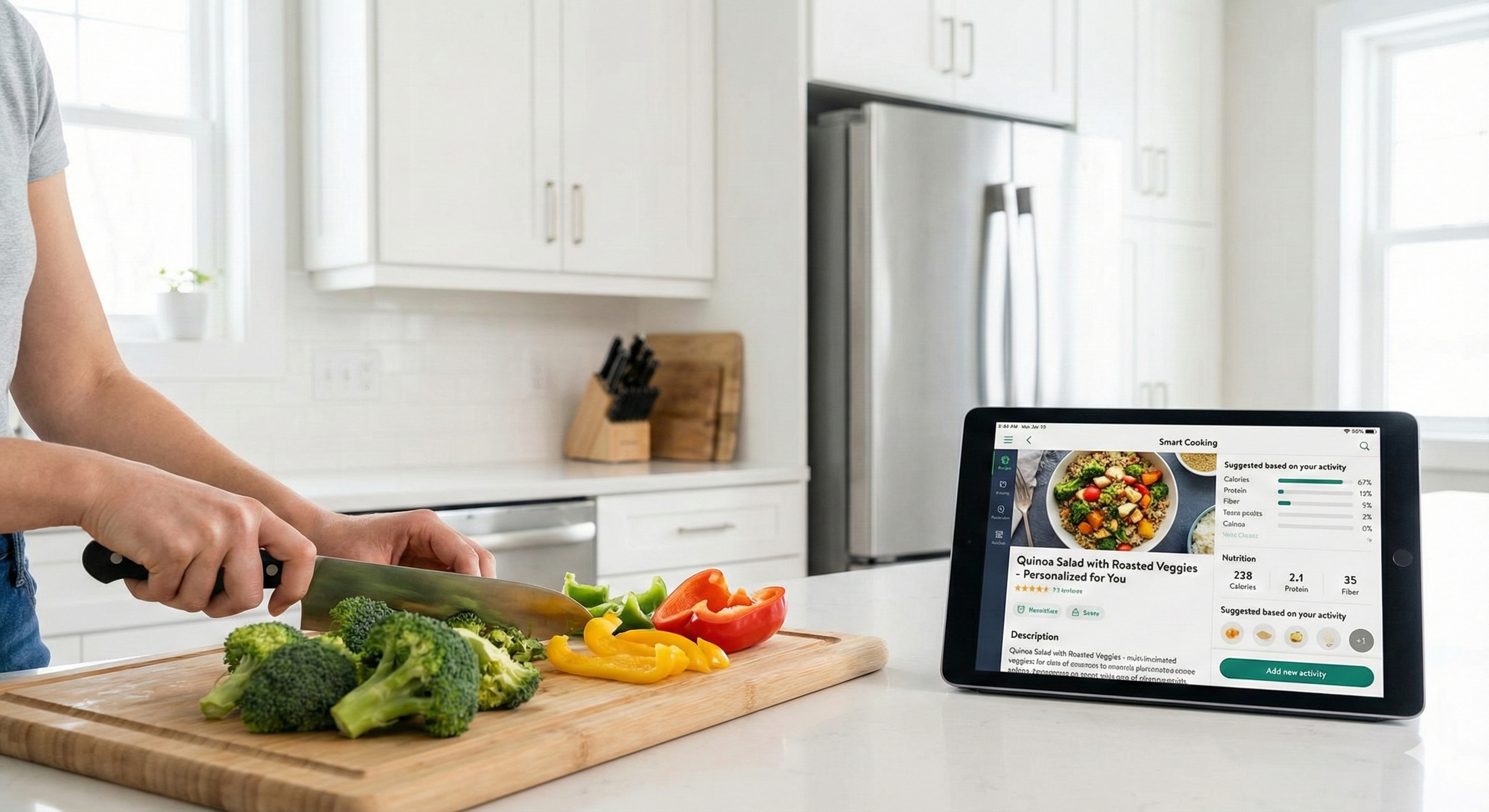
2. Nutrition: The Sunday Power Hour
Decision fatigue leads to takeout. Solve this with the “Sunday Power Hour.”
The Batch Cooking Formula
Spend 60 minutes on Sunday prepping the basics:
- 3 Proteins: Grilled chicken, hard-boiled eggs, baked salmon.
- 2 Carbs: Quinoa, roasted sweet potatoes.
- Unlimited Veggies: Washed spinach, chopped peppers, roasted broccoli.
The Rule: Mix and match these during the week.
- Lunch: Spinach + Chicken + Quinoa + Olive Oil.
- Snack: Hard-boiled egg + Peppers.
Hydration Hacks
Dehydration causes brain fog.
- Buy a 32oz Bottle: Drink one before lunch, one after.
- Electrolytes: Add a pinch of sea salt and lemon to your morning water for better absorption.
3. Sleep: The Non-Negotiable Performance Enhancer
Sleep is when your brain cleans itself. Less than 7 hours = cognitive impairment equivalent to being legally drunk.
The 3-2-1 Rule
- 3 Hours Before Bed: No food (digestion disrupts deep sleep).
- 2 Hours Before Bed: No work (cortisol keeps you awake).
- 1 Hour Before Bed: No screens (blue light kills melatonin).
Environment: Keep your room cool (65°F/18°C) and pitch black.
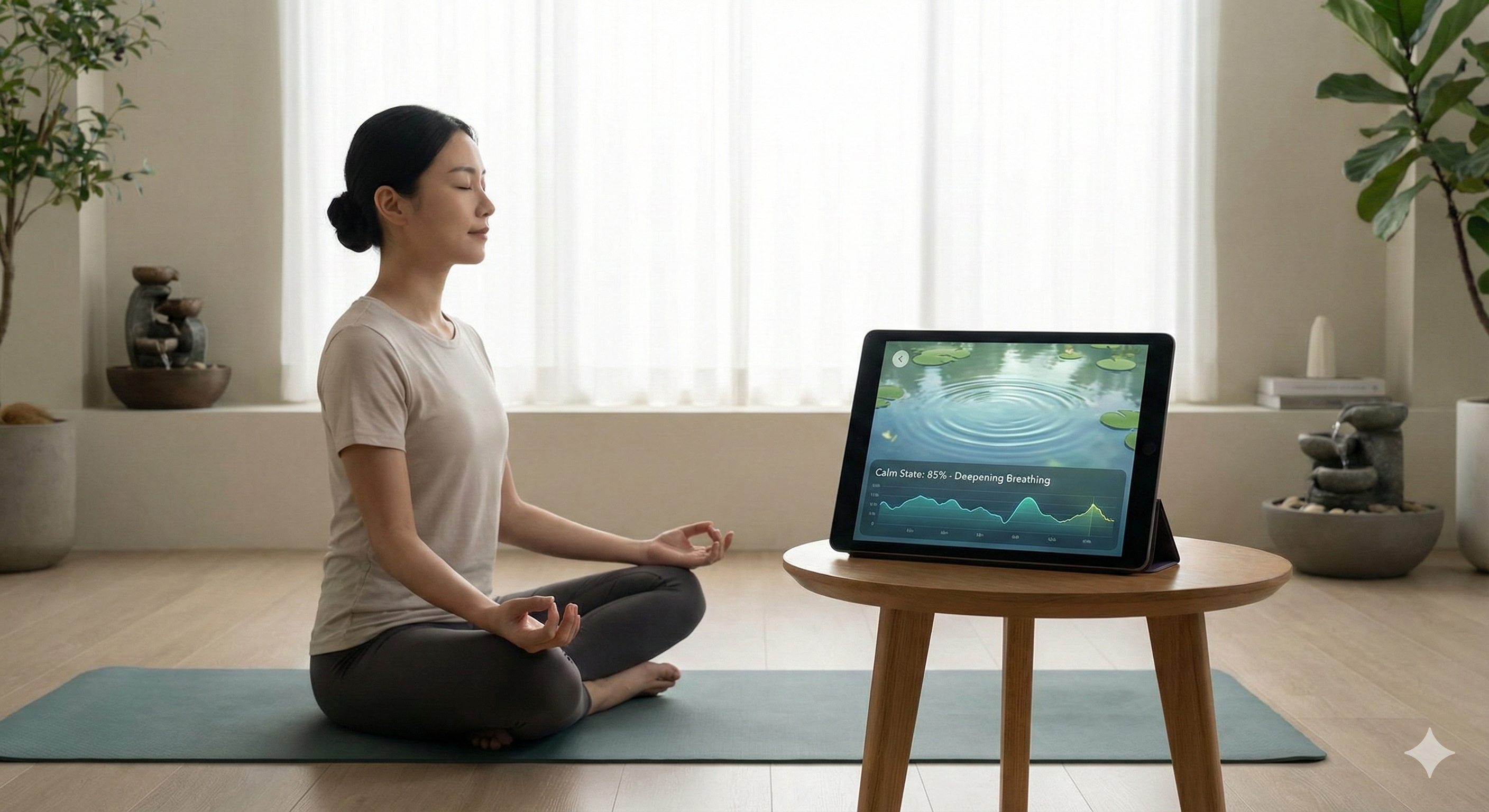
4. Stress Management: Biohacking Your Nervous System
Chronic stress destroys your immune system. Use these tools to reset.
Box Breathing (Navy SEAL Technique)
Use this before a high-stakes meeting:
- Inhale for 4 seconds.
- Hold for 4 seconds.
- Exhale for 4 seconds.
- Hold for 4 seconds. Repeat 4 times. This physically forces your body into a calm state.
The Email Curfew
Set a hard stop. No email after 8 PM. Your brain needs downtime to problem-solve subconsciously.
5. Ergonomics: Protect Your Body
If you must sit, do it right.
- Monitor: Top of screen at eye level.
- Elbows: 90-degree angle.
- 20-20-20 Rule: Every 20 minutes, look at something 20 feet away for 20 seconds to prevent eye strain.
Conclusion: The 60-Minute Miracle Morning
How you start the day dictates how you finish it. Try this 60-minute routine:
- 0-2 min: Drink 16oz water.
- 2-22 min: Movement (Jog, Yoga, HIIT).
- 22-35 min: High-protein breakfast (30g protein).
- 35-45 min: Meditation or Journaling.
- 45-60 min: Deep Work (Top priority task).
Health isn’t a cost; it’s an investment. Start with one of these pillars today.
Related Articles
Related Articles

AR/VR Daily Experiences: Where Immersion Helps—and Where It’s Just Noise
AR and VR are moving from novelty to utility in specific contexts. This article translates immersive tech into everyday scenarios, with a clear view of convenience vs control and privacy vs personalization.

AI Wearables: Convenience, Control, and the New Personal Data Boundary
AI wearables promise hands-free assistance and better habits, but the real question is what you trade for that convenience. This article maps everyday scenarios to privacy, control, and realistic adoption barriers.

Autonomous Vehicles & Robotaxis: Convenience vs Control in Everyday Mobility
Robotaxis and autonomous driving systems can change how cities move, but adoption depends on trust, regulation, and everyday practicality. This article focuses on realistic scenarios and the tradeoffs people feel.