Embedded AI in Enterprise Software: From Feature to Default Capability
Embedding AI inside enterprise workflows can reduce friction and improve decisions, but it changes governance, UX, and accountability. This article explains the operational “how and why” behind adoption.
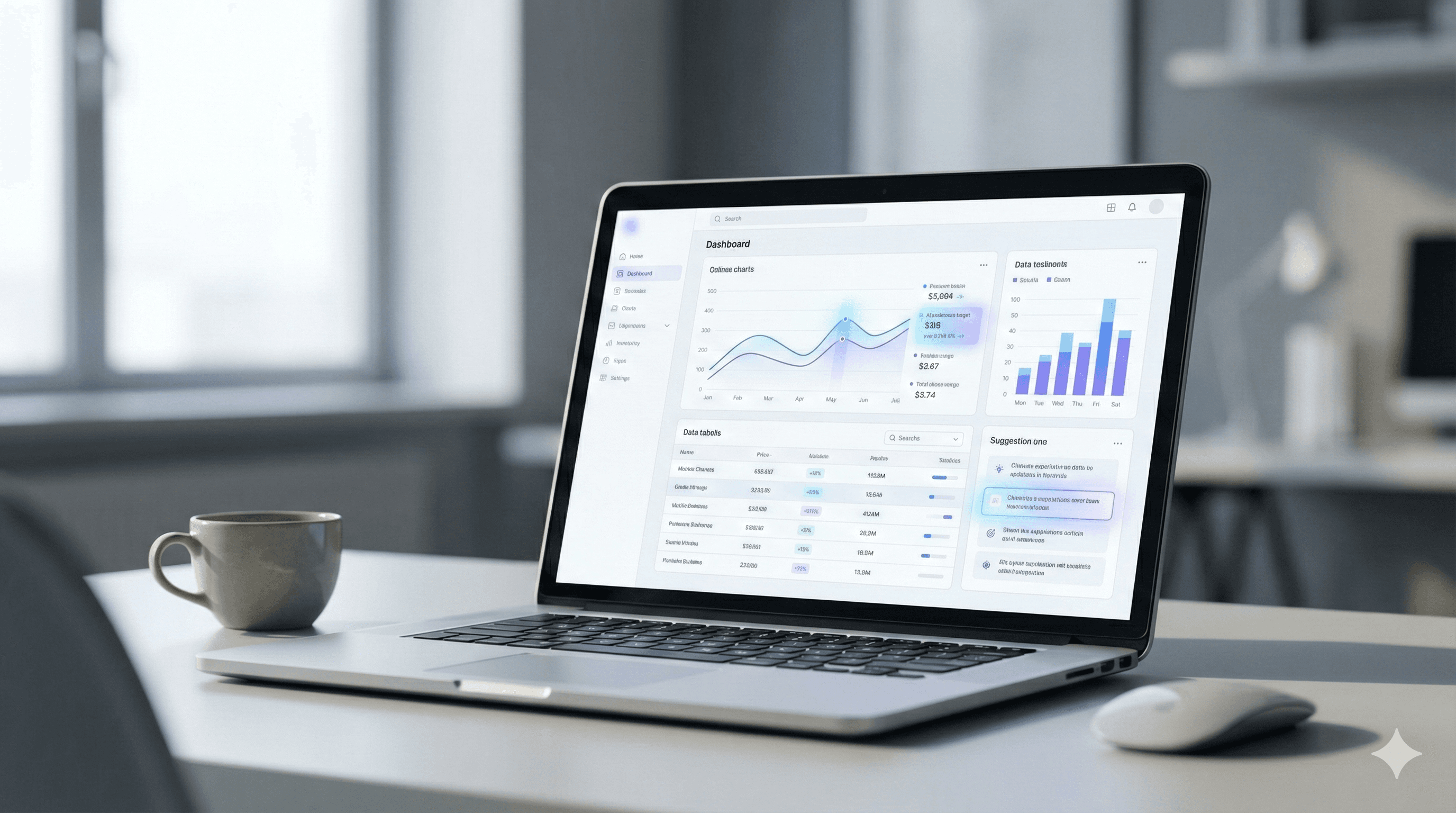

Summary: Embedded AI becomes valuable when it shortens the distance between intent and action—inside the tools people already use. The risk is turning AI into a silent decision layer without clear accountability.
1) Business problem
Enterprise software is full of “micro-friction”: manual data entry, repetitive status updates, and constant context switching. Teams want faster decisions and cleaner workflows, but they also need reliability and auditability.
Standalone AI tools help, but they often fail to integrate into real work. The business demand is for AI that lives inside the workflow.
2) Technology solution overview
Embedded AI means AI features integrated into core workflows:
- drafting and summarization inside CRM/ERP tools,
- recommendation and next-step suggestions,
- anomaly flags and guided triage,
- natural language interfaces to structured actions.
What it replaces: “copy/paste between systems” knowledge work and manual lookups.
3) Operational transformation
Embedding AI changes operating behavior:
- users shift from composing from scratch to reviewing drafts,
- managers shift from asking for updates to inspecting structured summaries,
- teams can standardize decision templates.
This can improve consistency—but only if the organization trains users on how to validate outputs and when to escalate.
4) Governance & risk

Key risks:
- Shadow decisions: AI suggests actions without clear traceability.
- Data leakage: embedding AI into sensitive records increases exposure.
- Policy drift: outputs diverge from compliance requirements over time.
Governance needs:
- clear disclosures (“AI suggested”),
- logging and versioning,
- scoped access controls,
- human approval for high-impact actions.
5) Key Insights & Trends (2025)
Embedded AI has moved from a premium feature to a standard expectation. In 2025, TinyML and Small Language Models (SLMs) are running directly on edge devices, bringing intelligence to everything from industrial sensors to consumer appliances without needing constant cloud connectivity.
Key Trends:
- On-Device LLMs: Optimized small language models (SLMs) are now capable of running on laptops and high-end mobile devices, providing privacy-preserving AI assistance offline.
- NPU Ubiquity: Neural Processing Units (NPUs) are now standard in most new processors, enabling efficient, low-power AI inference at the edge.
Data Points:
- 90% of new edge devices released in 2025 feature dedicated AI acceleration hardware.
- The shift to edge AI processing has saved enterprises an estimated 30% in cloud inference costs, while simultaneously improving data privacy compliance.
6) Industry examples
- Sales: call summaries and next-step drafts with standardized follow-ups.
- Finance: invoice triage and exception summaries.
- HR operations: policy Q&A with citations and escalation triggers.
Across industries, embedded AI works best when it augments structured workflows rather than inventing new ones.
6) Adoption roadmap
- Pick workflows with high repetition and clear quality criteria.
- Launch as “draft + suggest” before “act.”
- Train reviewers and define escalation rules.
- Monitor quality drift and feedback loops.
- Expand surface area once governance is proven.
7) FAQs
Q: Why embed AI instead of using a separate tool?
A: Because value is created where work happens—inside the workflow and data context.
Q: What’s the biggest organizational challenge?
A: Change management: teaching people to validate, not blindly accept.
Q: How do we keep it compliant?
A: Policies, logging, and clear approval boundaries for sensitive actions.
Q: Will embedded AI reduce headcount?
A: Outcomes vary. The practical goal is reducing friction and improving consistency, not making staffing promises.
8) Executive takeaway
Embedded AI will become a default capability in enterprise software because it reduces micro-friction. The differentiator is governance: making AI assistance transparent, auditable, and safe—so the organization gains speed without losing control.
Related Articles
Related Articles

Hyperautomation & Agentic AI: Turning Automation into an Operating Model
Hyperautomation is no longer just RPA plus scripts. Agentic AI shifts automation toward goal-driven orchestration—making governance, change management, and risk controls the real differentiators.

AI-Driven Cybersecurity: Detection Gains, Governance Debt
AI can improve detection and response speed, but it also expands complexity and raises governance questions. This article focuses on organizational impact, risk controls, and practical adoption patterns.

Digital Twins: Why Businesses Build Them (and Why Many Fail)
Digital twins can improve planning and operations by connecting models to reality, but they require disciplined data governance and change management. This article explains adoption in business terms—without hype.